
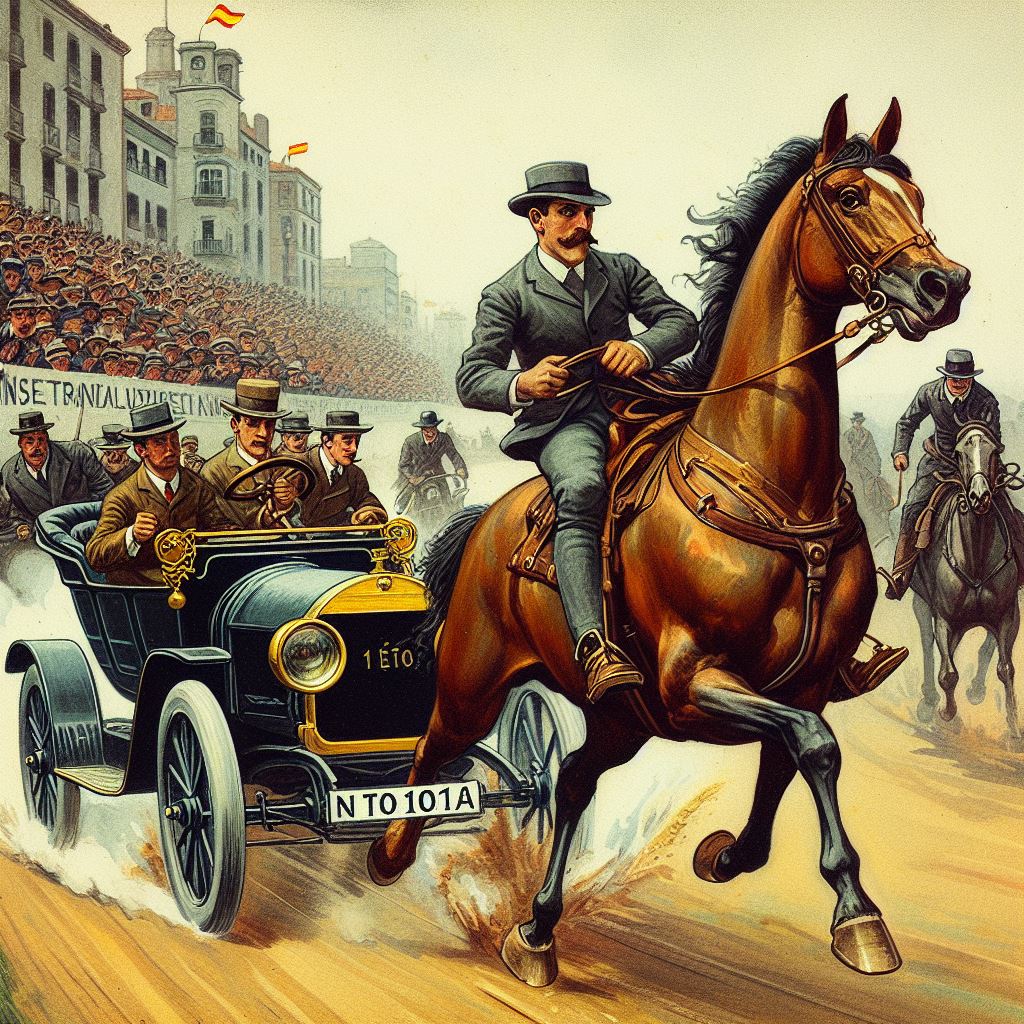
Было в Истории такое событие как, соревнование испанской лошади с автомобилем?
Да, такое необычное соревнование действительно имело место в истории. Это произошло в 1913 году в штате Колорадо, США.
26 января 1913 года владелец автомобиля Хадсон Супер Сикс по имени Чарли Гастон из Денвера принял вызов бизнесмена Харри Фэра. Фэр утверждал, что его лучшая андалузская лошадь по кличке Миссури может обогнать автомобиль Чарли на дистанции в 25 миль (около 40 км).
Соревнование прошло по гравийной дороге между городами Денвер и Литтлтон. Лошадь Миссури бежала рысью, а автомобиль двигался на скорости около 40 км/ч. В результате упорной борьбы лошадь финишировала первой, опередив Хадсон Супер Сикс всего на две минуты.
Это необычное состязание привлекло большое внимание публики и прессы того времени. Оно стало своего рода символом противостояния между старым и новым — традиционными средствами передвижения и наступлением автомобильной эры. Победа лошади над автомобилем была неожиданной и воспринималась как своеобразный «реванш» лошадей.
Вот более подробная информация об этом необычном историческом соревновании между лошадью и автомобилем в 1913 году:
Состязание прошло 26 января 1913 года в окрестностях Денвера, штат Колорадо. Инициатором выступил местный бизнесмен и заводчик лошадей Харри Фэр. Он утверждал, что его лучшая андалузская кобыла по кличке Миссури сможет опередить на дистанции 25 миль (около 40 км) самый современный на тот момент автомобиль.
Вызов принял владелец нового Хадсон Супер Сикс Чарли Гастон. Для большей объективности было решено провести состязание по прямому гравийному шоссе между Денвером и Литтлтоном.
В назначенный день перед стартом лошадь Миссури прогулялась несколько миль, чтобы размяться. Затем она встала на старте рядом с автомобилем Гастона. По сигналу они одновременно начали движение.
Миссури сразу ушла вперед, взяв крупную рысь. Хадсон же на начальном этапе не мог развить максимальную скорость из-за плотного потока машин на шоссе. Лишь после 5 миль он смог разогнаться до 40 миль/ч (64 км/ч).
На финишной прямой лошадь и автомобиль шли почти вровень. Но в последние сотни метров кобыла Миссури собрала все силы и первой пересекла финишную черту, опередив Хадсон Супер Сикс на две минуты.
Эта сенсационная победа лошади привлекла огромное внимание общественности и прессы. Многие восприняли ее как своеобразный протест против наступления автомобильной эры и защиту традиционных ценностей.